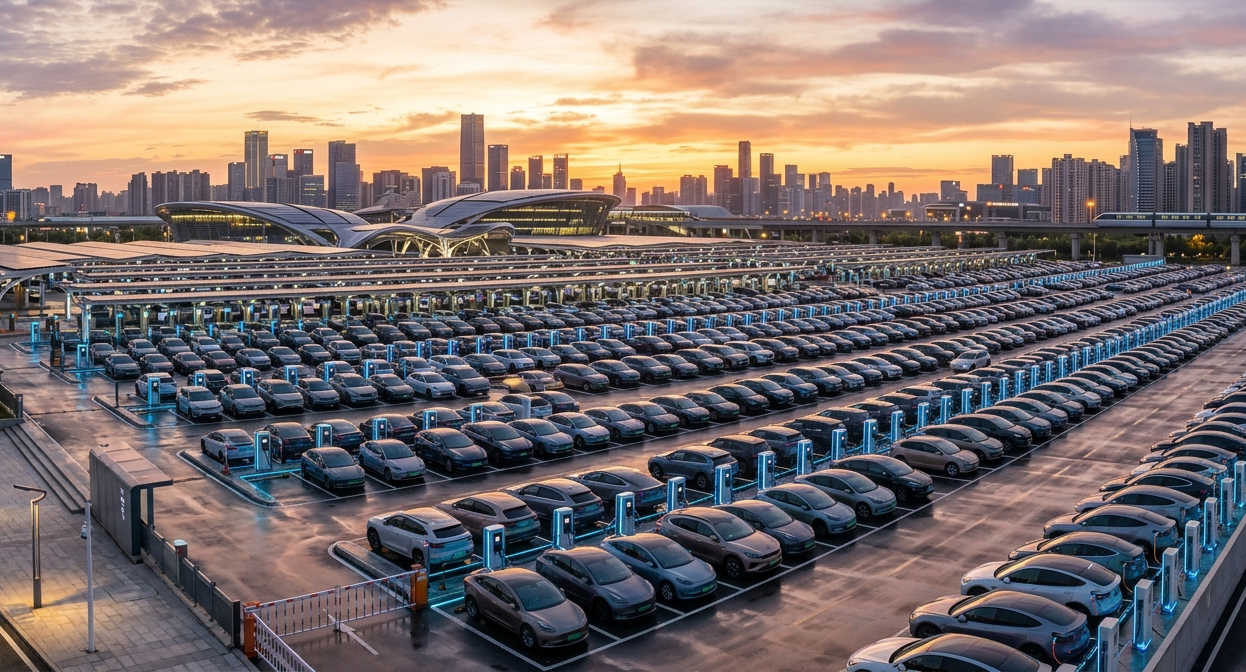
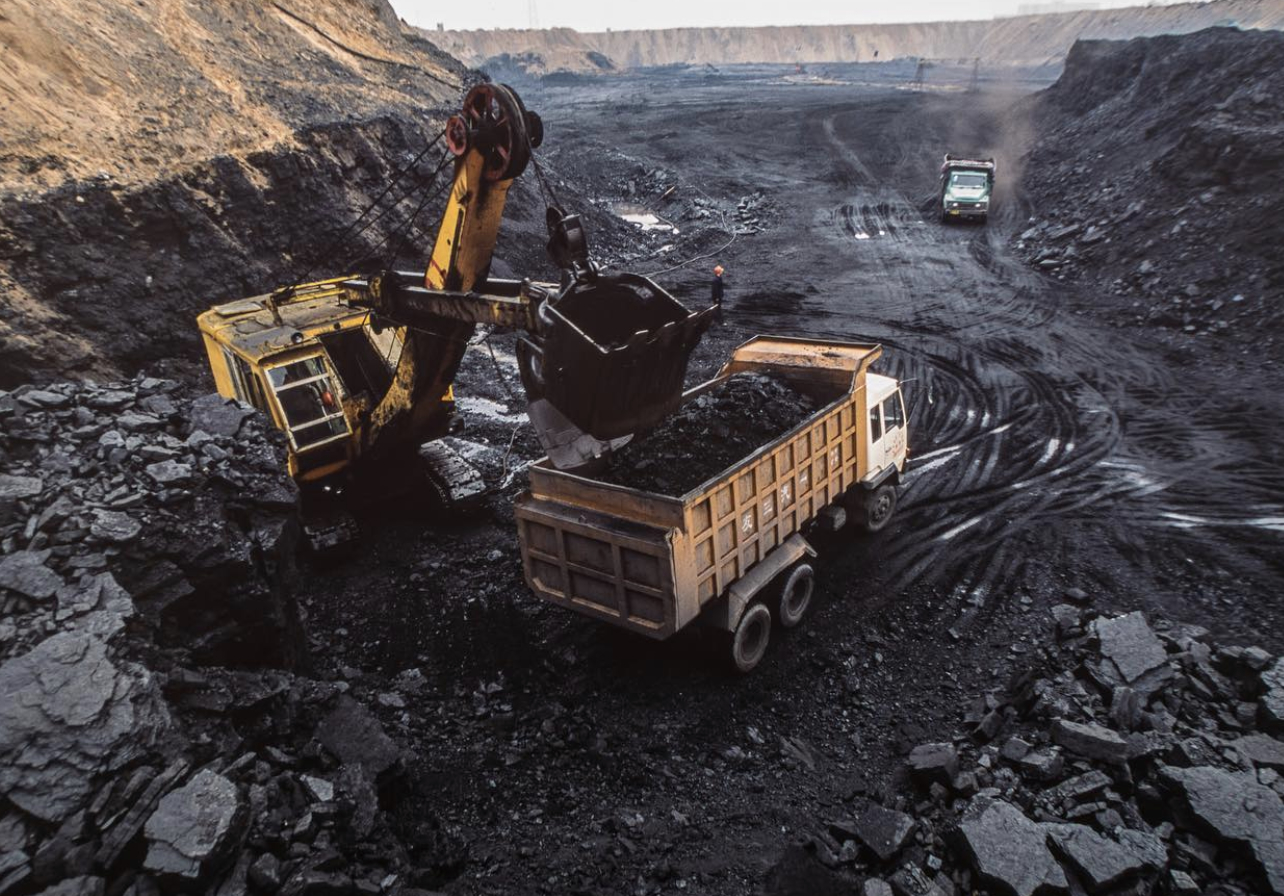
No matter how electrified a country is, it depends on a floor of industrial molecules. Solar panels, lithium batteries and electric vehicles have already won the grid and ground transportation on cost. But a massive architecture of the physical economy cannot be electrified; it runs on molecules, not electrons.
The ammonia that fertilizes crops for eight billion people requires hydrogen atoms, the steel in every high-rise requires them to strip oxygen from iron ore, and the plastics of modern life are assembled from long hydrocarbon chains. We have spent a century calling these outputs "petrochemicals," but there is nothing chemically sacred about petroleum. It was simply the cheapest, most accessible source of hydrogen and carbon atoms on the planet. The underlying chemistry requires the atoms; it has never cared about the oil.
When Germany and Japan launched their multi-billion-dollar hydrogen strategies in the early 2020s, they understood this molecular reality better than most. But their industrial policies contained a fatal blind spot: they assumed green hydrogen’s cost premium was a property of unscaled technology that would naturally decline over time. In reality, the cost of hydrogen is almost entirely a function of localized electricity prices. At European grid rates, electrolyzing water for hydrogen costs $5–$8/kg, while grey hydrogen stripped from natural gas costs $1–$2/kg. No rational industrial buyer willingly pays a 400% premium for a commodity input, and compelling them to do so has proven impossible. By late 2025, Germany had built less than two percent of its 2030 domestic electrolyzer target before quietly pivoting to an import model. The first wave was built on climate ambition, and it failed.
The second wave is an exercise in cost and geographic arbitrage. In the deep deserts of western China, off-grid solar arrays generate electricity at under $0.02/kWh. Fed directly into onsite electrolyzers, these cheap electrons yield green hydrogen at a claimed floor of $1.2/kg—firmly undercutting the baseline cost of natural gas. No industrial buyer ever loved fossil fuels; they bought the cheapest molecule, and the cheapest molecule is changing address.
Don't burn the indispensable molecule
The first wave wasted a decade trying to burn hydrogen: hydrogen cars, hydrogen trains, hydrogen-fired power. All of it was a category error. Anywhere the task is kinetic movement or grid generation, an electron does the job directly. Sending that electron the long way around—splitting water, compressing the gas, and reconverting it to electricity—vanishes most of the energy en route.
The entire existing market demands the molecule as a physical ingredient, not a thermal fuel. The world already consumes roughly 100 million tonnes of hydrogen annually, stripped almost entirely from fossil fuels. The speculative consumer applications championed a decade ago are a rounding error.
The largest slice of that demand, petroleum refining, is the least relevant to this transition. That hydrogen is consumed to strip sulfur from crude and crack heavy oil fractions into lighter fuels in a captive industrial loop tied directly to a baseline barrel of oil. Desert hydrogen is not chasing the oil refineries. The true prize is chemical feedstock—the ammonia, methanol, and olefins concentrated in inland industrial basins where the processing economics actually work.
China manufactures and consumes nearly a third of all hydrogen globally, and that base is currently grey, built on highly carbon-intensive steam-methane reforming and coal gasification, which makes it a structural exposure. Yet an ammonia molecule cannot tell whether its constituent hydrogen was stripped from gas or split from desert water. Those are identical molecules. The only question that has ever mattered is which source can deliver it cheaper.
The hydrocarbon divide
The global rollout of desert hydrogen is not being driven by net-zero pledges. It is driven by one question that has nothing to do with climate: do you already have your own cheap oil and gas? The answer sorts the world into three distinct domains.
The first group is the petrostates and cheap-gas producers—the United States, the Gulf, Russia, and Trinidad. They sit on sovereign hydrocarbons at $2–$4/MMBtu, making grey ammonia and conventional polymers their cheapest, most secure commercial path. They have no economic reason to build desert hydrogen, and they will not. CF Industries, the world's largest ammonia producer, tells its investors precisely this: cheap American gas gives it a structural cost advantage over European producers that "will persist." Consequently, they are doubling down—building the largest low-carbon ammonia plant on the US Gulf Coast on a baseline of cheap gas, with Japanese partners buying the output. A petrostate stays grey, safely insulated by its own geology.
The second group is China—a market whose sheer scale makes it an independent ecosystem. China imports most of its oil and gas, rendering the molecular economy a severe strategic vulnerability. This is the exact maritime choke point that solar, batteries, and electric vehicles were engineered to eliminate. The structural incentive is identical, the manufacturing engine is the same, and the rollout will rhyme: a domestic build-out that mainstream forecasters will underestimate for a decade straight. The molecular problem splits cleanly down the middle. The carbon half—the plastics—runs on China's sovereign coal, made dramatically more efficient by injected desert hydrogen. The hydrogen half—the ammonia, methanol, and iron reduction—runs on desert hydrogen replacing the grey molecules otherwise made from imported gas. Sovereign coal for the carbon, sovereign sunlight for the hydrogen.
The third group is the captive importers: the high-cost industrial hubs that import their energy—Japan, South Korea, Germany, and the gas-based producers of India. They have neither cheap domestic molecules nor an empty desert of their own. For them, desert ammonia shipped from abroad is simply cheaper than ammonia manufactured at home from expensive imported LNG. Cheaper, not greener.
This stopped being a forecast in March 2026. Envision shipped the first commercial cargo of green ammonia from its complex in Inner Mongolia to the port of Ulsan in South Korea. The same producer holds a long-term offtake agreement with a Japanese trading house. A reading of hydrogen as climate policy cannot explain why Korea and Japan are first in line for Chinese desert ammonia. A reading of it as structural cost reduction and energy diversification predicts exactly these buyers, in exactly this order—the highest-cost importers first.
The molecule is consumed directly as ammonia: as a maritime bunker fuel, burned alongside coal in utility-scale power stations, or fed into fertilizer synthesis. Japan has already run a twenty-percent ammonia co-firing blend in a 1,000-megawatt coal boiler at Hekinan; South Korea is converting two dozen legacy coal units to do the same. The climate math for that is poor: co-firing ammonia in a legacy coal plant cuts lifecycle emissions only modestly and keeps the asset open. They are not buying the molecule to be virtuous. They are buying it because it lets an import-dependent nation keep its existing infrastructure running on a fuel it can source from a nearby desert rather than a contested maritime strait. Cost and security, not climate.
This creates a striking asymmetry across the East China Sea. East Asia's legacy industrial hubs spent a decade writing the regulatory mandates and creating the captive demand, but a single neighbor built the manufacturing machinery to satisfy it. China is at once the largest producer of ammonia, methanol and steel, the largest manufacturer of solar panels, inverters and electrolyzers, and a vast importer of oil and gas. A coincidence, surely.
Anatomy of the dollar-a-kilo molecule
The desert cost figure is not a speculative model. In Ningxia, Baofeng Energy operates a 200-MW solar array coupled directly to thirty 1,000 Nm³/h alkaline electrolyzers, roughly 150 MW of load, feeding the output straight into the coal-chemical complex beside them. The facility is fully operational, commercially profitable, and the International Energy Forum reports Baofeng's claimed levelized cost of as little as $1.2/kg, and notes analysts consider it optimistic. That figure is the floor, not the fleet: it belongs to the best-sited, fully collocated desert assets, and typical Chinese green hydrogen still lands well above it. Collocation is the discipline of building only where that floor exists. The synthesis chemistry has been understood for over a century; the innovation is entirely in the cost structure.
Australia is the definitive tell. It possesses some of the finest ambient solar and wind resources on the planet, yet it produces the most expensive hydrogen on this chart. The reason is structural: its civil engineering, industrial labor, and equipment deployment all carry a heavy Western cost premium. Natural resource endowment was never the binding constraint. What separates $1.20 hydrogen from $10 hydrogen is the localized price of input electricity and the capital expenditure required to construct the processing plant. On both fronts, China has consolidated the entire value chain—controlling roughly 80% of global polysilicon manufacturing, the majority of electrolyzer production, vast desert expanses at optimal latitudes, and the world's most concentrated market for industrial molecules sitting immediately adjacent to the supply.
Crucially, part of this structural advantage is not physical at all. Desert hydrogen production is almost exclusively a game of upfront capital expenditure—once the solar arrays and electrolyzers are deployed, the fuel input is free. Consequently, the cost of capital represents one of the largest components of levelized cost. Here, China holds a systemic edge that has nothing to do with meteorology: the lowest inflation and the lowest sovereign borrowing costs of any major industrial economy, at a time when borrowing costs in other major economies are climbing sharply. This macroeconomic advantage is amplified by state-directed institutions that absorb early-stage construction risk, paired with a domestic supply chain that delivers infrastructure on time and on budget. This financial optimization stack alone shaves roughly $0.50/kg off production costs—halving the structural gap before a single hour of sunshine is registered. The advantage is partly engineered, not merely inherited from geography. And as borrowing costs compound over time, this divergence widens over the twenty-year lifecycle of an asset.
Cheap to make, miserable to move
If desert hydrogen is this structurally cheap, and the molecular demand is this deeply entrenched, its ~1% market share presents an apparent paradox. The barrier is neither production economics nor customer appetite. It is entirely physical: hydrogen is exceptionally cheap to generate in a desert, and miserable to transport out of it. Because the molecule possesses the lowest volumetric energy density of any gas, moving it requires compressing it under immense pressure, chilling it to a liquid at severe cryogenic penalties, or bonding it into a denser carrier molecule like ammonia. Consequently, the $1.2/kg price tag is exclusively a price at the desert floor. The binding constraint on this entire asset class is structural collocation—physically marrying the cheap desert electron and the necessary water input to the chemical synthesis loop on-site.
The conventional bear case against this model assumes that solar power is too intermittent for continuous chemistry, and that deserts lack the water required for mass electrolysis. Operating assets on the ground are proving both assumptions outdated. A chemical synthesis loop requires stable, 24/7 feedstock streams; it cannot tolerate power that lurches with cloud cover, nor do cheap alkaline electrolyzers endure violent load fluctuations. To overcome this, these facilities bypass the regional grid entirely by constructing dedicated industrial microgrids. Assets like Envision’s Chifeng plant in Inner Mongolia operate off-grid by balancing an overbuilt wind-and-solar generation mix with hundreds of megawatt-hours of utility-scale battery storage (BESS), a hybrid bank of fast-ramping electrolyzers, and high-pressure hydrogen buffer tanks to deliver an unwavering molecular stream directly into their ammonia loops.
Managing the water paradox requires equal engineering discipline. Splitting water requires a stoichiometric minimum of nine liters of water per kilogram of hydrogen—a figure that climbs to 2-3 times that once industrial purification and cooling towers are factored in. In an arid northwest basin, any project relying on pristine freshwater would collide directly with local agriculture and trigger severe ecological red lines. The operating plants resolve this by sourcing water no one else wants. Inland, they run on reclaimed municipal wastewater; a 2025 study by the Harbin Institute of Technology put the theoretical water-resource capacity of China’s municipal reclaimed water at 95 to 213 million tonnes of hydrogen a year—on the order of global demand, without redirecting a single drop of irrigation. On the coast, a first-of-a-kind 110-kilowatt unit at Rizhao has run more than 500 hours splitting untreated seawater directly, on low-grade waste heat from the adjacent steel and petrochemical plants.
This leaves one bottleneck: civil engineering capacity. The deciding factor is no longer chemical novelty or equipment cost, but the speed at which a developer can lay water-reclamation pipelines into the desert, construct chemical synthesis hubs over cheap electrons, and pipe the finished, uncracked ammonia out to deepwater ports. This is a deployment-velocity contest, and scaling heavy civil infrastructure is where China's demonstrated advantage is widest. This explains why Chinese desert projects consistently reach final investment decision (FID), while across the rest of the world the IEA counts fewer than one announced green hydrogen project in ten reaching it. The global supply of solar panels and electrolyzer factories was never the limiting factor; the limit is concrete and steel in the right places.
Reducing reliance on the petrostate
The most strategically significant application of desert hydrogen inside China is not ammonia synthesis. It is the direct injection of the clean molecule into coal-to-olefins (CTO) manufacturing—the primary chemical pathway by which China synthesizes core industrial polymers from domestic coal rather than imported petroleum.
The process begins by gasifying solid coal into synthesis gas, or syngas: a volatile mixture of carbon monoxide and hydrogen. Manufacturing ethylene—the basic building block of global plastics—requires a strict 2:1 molecular ratio of hydrogen to carbon monoxide. Raw coal gasification yields a stream that is far too carbon-heavy, leaving a large hydrogen deficit. To close this gap, a conventional plant runs a water-gas shift reaction: it diverts a massive fraction of its input carbon monoxide, reacts it with high-pressure steam, and vents the resulting carbon dioxide into the atmosphere purely to liberate the hydrogen atoms required for the downstream polymer synthesis.
The green molecule has to be injected directly into an operating, high-heat petrochemical plant, which is why China's coal-chemical complexes, already sited in the sun-and-coal corridors of the northwest, can execute it. Sovereign coal provides the carbon backbone, sovereign sunlight provides the hydrogen input. The seaborne barrels of imported crude that plastic-making would otherwise have required are now looking for new customers.
The Inflection Curve
Five years ago the three objections were priced as permanent: a technology premium, the volatility of solar irradiance, the scarcity of freshwater in arid basins. But these boundaries were never intrinsic limits of the molecule; they were simply engineering variables waiting for integrated industrial design. By driving input power costs below $0.02/kWh, stabilizing downstream chemical synthesis via closed-loop microgrids, and sourcing non-potable municipal wastewater, the structural friction has been systematically engineered out of the asset class. The physical runway is clear.
What consensus models consistently fail to grasp in mid-2026 is that a ~1% current market share is not a sign of stagnation—it is a lagging indicator of heavy industrial capital expenditure. A software application scales instantly; a utility-scale chemical synthesis network requires a non-negotiable 3-4 year civil engineering and construction cycle. The state-backed capital deployed in the policy waves of 2022 and 2023 is only now clearing its build and commissioning phases; the output shows up after the concrete dries.
Prediction — locked June 2026
China's desert hydrogen reaches ≥1 Mt of operational and commissioned capacity by the end of 2026, and ≥2 Mt by the end of 2028 — the base of the curve in Exhibit 5.
For magnitude: 2 Mt is roughly forty times what Germany built in a decade, reached in two years.
Falsification signal: if the collocated projects in Ningxia and Inner Mongolia — the easiest, best-sited hydrogen on the planet — are not reaching final investment decision in commercial volume through 2027, the construction-cycle thesis is wrong and this needs rework. Watch the FID announcements in those two provinces.
Western energy strategists priced green hydrogen's cost premium as a property of the molecule. It is a property of two local prices: power tariffs and the cost of capital. In the right desert both are already low. The nation that controls the cheapest input electron inevitably dictates floor prices of global fertilizer, steel, and polymers. Germany localized the correct molecule but lacked the power profile to afford it. Japan identified the correct molecule but chose the wrong use cases, and lacked the domestic geography to secure it. China bypassed global energy markets entirely by manufacturing the equipment, deploying the off-grid arrays, and plumbing the clean molecule directly into the largest chemical footprint on earth.
Crude oil and natural gas were only ever the cheapest place to get hydrogen and carbon together. The hydrogen can now be split in the deep desert, and the carbon drawn from the sovereign coal beside it. Every materials road now bends toward the desolate expanses a few hundred kilometers west of Beijing.
What happens when this collocation logic crosses borders—when these mega-synthesis plants are constructed in other nations' deserts, and on whose capital equipment—is the next horizon.
Get the next post by email. No spam.